Founded in 2017, the Medical Organization for Latino Advancement (MOLA) is a non-profit association of physicians and health professionals working for career advancement, linguistic and cultural competency, and health care access and quality for the Hispanic/Latinx community.
Through our Academic and Leadership pathways programming, MOLA has supported over 600 LHS+ mentees and scholars pursuing careers across more than ten healthcare fields and awarded more than $575K in scholarships in partnership with the Michael Reese Research and Education Foundation (MRF). MOLA has also hosted community and academic events, including our annual LHS+ Health Conference in support of academic and professional development opportunities through education, mentorship and networking opportunities for LHS+ students, researchers, faculty, healthcare professionals and the larger LHS+ community.
Though founded in Chicago, MOLA's programming has impacted people and communities on an increasingly national scale, with hundreds of scholars and mentees across the U.S. in 2025. MOLA was thrilled to host the Annual Conference in partnership with the National Association of Medical Spanish (NAMS) in San Antonio, Texas. 2025 marked the first time our conference was hosted outside of Chicago, highlighting MOLA's growing national footprint. The support and generosity of the healthcare and LHS+ communities have been pivotal to MOLA's growth and progressively increasing impact on health equity on a local, regional and national scale. Now more than ever, that support is essential so that MOLA can remain an unwavering advocate and resource for the entire LHS+ community.
Sadly, we have borne witness to external factors that threaten the integrity and independence of institutions of higher learning. Additionally, these same forces have not only jeopardized the ability for healthcare professionals to conduct groundbreaking research and care implementation to benefit vulnerable communities, but threatened the very safety and security of the communities that we are all a part of. MOLA remains firmly grounded in the values that have guided our organization since its inception: health equity for all, linguistic and cultural competency for the benefit of all members of our communities, and a dedication to ensuring that the voices of vulnerable and marginalized communities are heard, be it in our country's scientific research facilities, in our clinics and hospitals, or in the halls of power that shape policy.
As the only LHS+ healthcare professional society in the U.S. led by a physician, MOLA is in a unique position to continue to support aspiring underrepresented healthcare professional students through mentorship and scholastic support for many years to come. We look forward to having you join us in our mission.
On behalf of MOLA,
Jonathan Moreira, MD
President
MOLA is a non-profit association of physicians and health professionals working for career advancement, linguistic and cultural competency, and health care access and quality for the Hispanic/Latinx community.
The 2025 membership data reveals a year of intermittent growth, characterized by two significant peaks in April and September. These surges demonstrate a strong capacity for high-volume recruitment. Our goal for 2026 is to continue membership growth through in-person events, with a clear opportunity for stabilizing recruitment efforts in the off-peak months.
Membership Category
The 2025 category profile shows that our membership is heavily driven by the academic sector, with Student Memberships making up nearly 72% of our total community. While this high student engagement ensures a strong future pipeline, the relatively low representation of Attending Physicians and Residents suggests a significant opportunity to better tailor our benefits toward practicing medical professionals to achieve a more balanced and sustainable membership mix.
Geographic Reach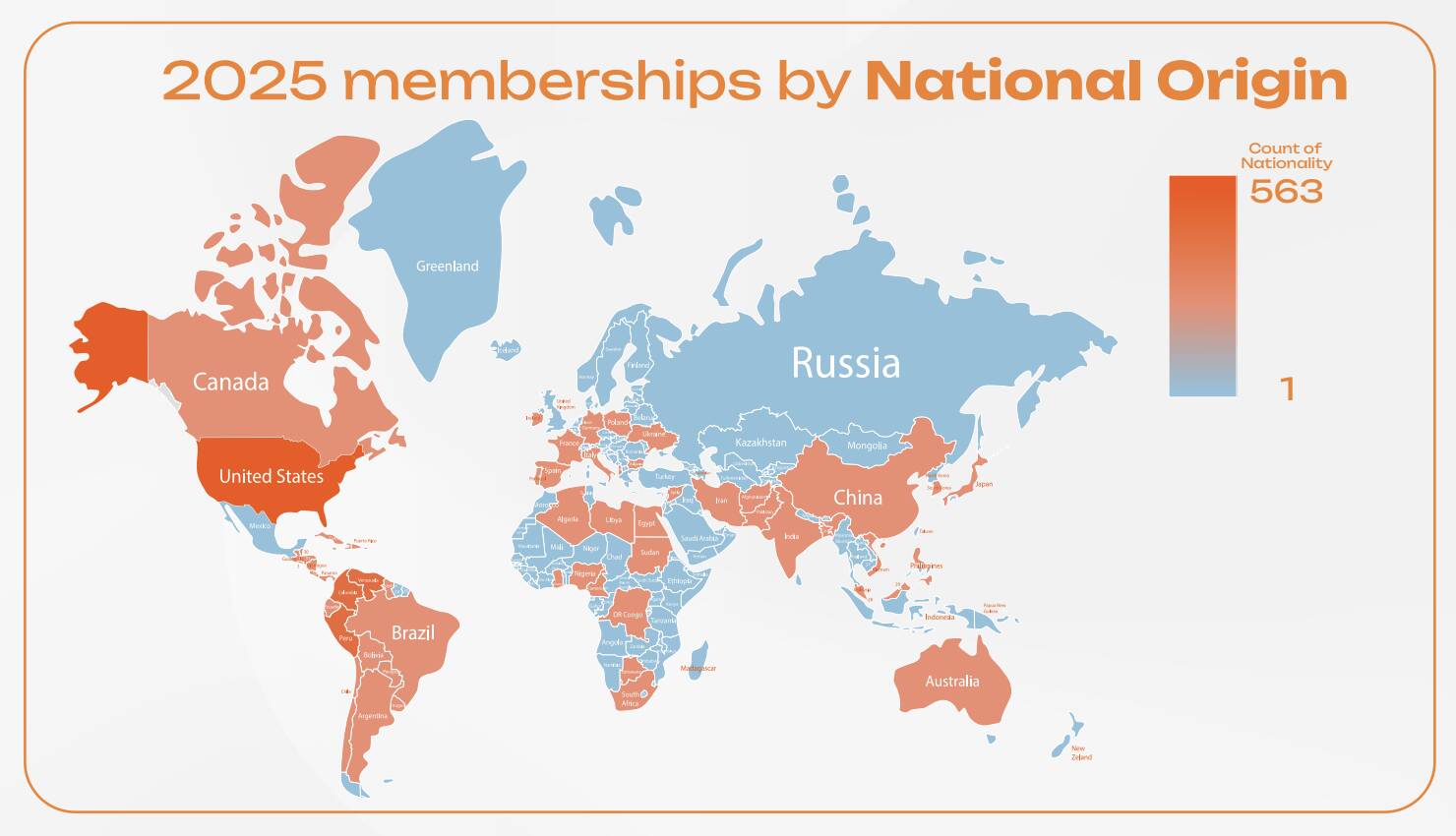
This 2025 membership distribution map reflects and confirms the organization's deep roots within the Hispanic medical community, showcasing a diverse network of professionals defined by their national origins. While members originating from the United States form the largest cohort, the network's strength lies in its significant representation of medical professionals from Latin America.
This distribution highlights our own role as a vital link for doctors and students of Hispanic heritage, regardless of where they currently practice. Moving into 2026, our focus remains on fostering this sense of professional identity support, ensuring that our network continues to empower medical professionals from every corner of the Spanish-speaking world.
Through a continued partnership between the Michael Reese Research and Education Foundation (MRF) and the Medical Organization for Latino Advancement (MOLA), the MOLA–MRF Scholars Program provides annual scholarship support to emerging Latino/a/e health professionals pursuing careers across medicine, public health, pharmacy, and allied health fields. By offering scholarships on an annual basis, the program helps reduce the significant financial burden students face while pursuing healthcare training and represents a strategic investment in the next generation of leaders working to address health inequities in Chicago and beyond.
Together, this partnership represents a meaningful investment in the talent needed to advance health equity and strengthen the pipeline of culturally responsive healthcare professionals serving Latino communities.
Thanks to the generous support of the Michael Reese Foundation, $99,000 in scholarship funding was awarded to scholars in the 2025 cohort and MOLA's Faculty Scholar. All 11 scholars successfully completed the program, representing a 100% cohort retention and graduation rate.
The 2025 cohort reflected the diversity of Latino/a/e communities, with scholars representing the following heritages: Salvadoran, Mexican, Ecuadorian, Venezuelan, Cuban, Portuguese and Peruvian.
Scholars were enrolled across a wide range of leading health professional programs nationwide, including schools of medicine, public health, pharmacy, and applied health sciences. This geographic and disciplinary breadth strengthens the pipeline of culturally grounded leaders entering multiple sectors of the healthcare workforce.
Nearly 45% of scholars reported experiencing obstacles related to ethnicity, race, or nationality during their educational journeys. In addition, 82% relied on loans to finance their training, underscoring the importance of scholarship investment in supporting persistence in health professional education.
By reducing financial strain and pairing scholars with mentorship and research opportunities, the MOLA–MRF Scholars Program helps strengthen pathways into leadership roles in healthcare and health equity research.
Participation in the program was associated with measurable gains in scholars' confidence engaging with research and applying it to future clinical and public health practice.
These outcomes reflect the program's success in preparing scholars to use research as a tool to advance equitable care and address the health needs of Latino communities locally and nationally.
The 2025 NAMS–MOLA Conference, hosted in San Antonio, marked a major milestone as the first time the convening was held outside Chicago, signaling the conference's continued evolution into a national platform advancing language equity, medical Spanish education, and Latino health workforce leadership.
Across two days, the conference convened:
Programming included 13 panels, 63 oral presentations, and 28 poster presentations, reflecting the growing national movement to strengthen language-concordant care and culturally sustaining healthcare systems.
Together, these sessions advanced practical strategies for addressing health disparities affecting Hispanic/Latinx communities and strengthened collaboration among clinicians, educators, researchers, and community leaders working across institutions nationwide.
The conference demonstrated strong growth in audience reach:
Participants represented physicians, medical Spanish educators, trainees, interpreters, language access professionals, researchers, and health system leaders.
These outcomes reflect the conference's role as a national hub supporting professionals working directly with linguistically diverse communities.
Participants reported measurable increases in confidence applying conference learning to practice:
These gains demonstrate the conference's effectiveness in strengthening provider readiness to implement equity-focused interventions in clinical, educational, and institutional settings.
At the conference, the Medical Organization for Latino Advancement (MOLA) hosted a dedicated Cancer Inequities Symposium focused on disparities affecting LHS+ (Latinx, Hispanic, Spanish-speaking, and related identity) communities in leukemia care.
The symposium:
The session opened with a keynote by Dr. Belinda Avalos, who shared national perspectives on strengthening pathway programs in hematology for historically underserved populations.
Together, the symposium supported workforce pipeline development and expanded dialogue around equitable cancer treatment access for LHS+ communities.
The conference also featured the first-ever Health Management & Leadership Track, expanding programming beyond clinical education to include systems-level leadership and health equity innovation.
This track:
The track also honored the leadership legacy of Óscar Iván Zambrano, MOLA Co-Founder and Immediate Past President, whose work helped shape MOLA's national leadership development efforts.
Programming included a keynote by Brendaly Rodríguez, Senior Engagement Officer at the Patient-Centered Outcomes Research Institute (PCORI), who shared strategies for advancing community-engaged research leadership nationwide.
Across sessions, participants strengthened their ability to:
By convening clinicians, educators, researchers, and language access leaders in a shared national space, the conference strengthened partnerships that will continue advancing culturally responsive healthcare beyond the meeting itself.
A Path to Cardiometabolic and Renal Health Equity
The Cardiometabolic & Renal Health Symposium convened 76 participants across clinical medicine, public health, research, and student training programs to address disparities affecting LHS+ (Latinx, Hispanic, Spanish-speaking, and related identity) communities experiencing cardiometabolic and renal disease.
This inaugural symposium represented the first joint collaboration between the Medical Organization for Latino Advancement (MOLA), the University of Chicago, and the Latino Medical Student Association, strengthening cross-institutional partnerships focused on advancing health equity through education, workforce development, and community-engaged research.
By bringing together clinicians, faculty, trainees, researchers, and community advocates, the symposium created a collaborative learning environment focused on improving prevention, diagnosis, treatment access, and culturally responsive care strategies for cardiometabolic and renal conditions disproportionately affecting LHS+ communities.
Through participation in the symposium, attendees:
As a result, the symposium helped strengthen interdisciplinary collaboration and contributed to building a more representative and equity-focused workforce prepared to address cardiometabolic and renal health disparities locally and nationally.
In summer 2025, MOLA hosted the inaugural MOLA in Motion with LMSA during the Latino Medical Student Association National Conference in Chicago, convening 164 participants for an evening dedicated to strengthening community connections across generations of LHS+ healthcare leaders.
This event created a national networking space for students, trainees, physicians, educators, and organizational leaders committed to advancing Latino health equity and leadership in medicine.
Through this gathering, participants:
By convening trainees and established professionals in a shared leadership space, MOLA in Motion with LMSA supported continued pipeline development and helped cultivate the next generation of clinicians and advocates working to improve health outcomes in Latino communities.
The Medical Organization for Latino Advancement (MOLA) Mentorship Program strengthens the pipeline of Latino/a/e health professionals by providing sustained mentorship relationships, leadership exposure, and structured professional development opportunities for undergraduate, postbaccalaureate, graduate, and international trainees pursuing healthcare careers.
Through a team-based mentorship model that connects students with physicians, resident physicians, trainees, and health system leaders, the program supports mentees at multiple stages of the pathway into medicine and related health professions.
In 2025, the MOLA Mentorship Program supported:
Mentorship relationships were supported through structured programming, leadership exposure, and skills-based academic pathway workshops designed to strengthen readiness for healthcare careers.
Together, these activities contributed to a growing national mentorship network advancing Latino representation across the healthcare workforce pipeline.
The mentee cohort reflected strong participation from students across multiple training stages:
These data demonstrate the program's effectiveness in supporting both early-stage and advanced trainees preparing to enter professional healthcare pathways.
The program successfully reached its intended audience of students from Latino backgrounds pursuing healthcare careers:
Participants also included representation across additional racial and ethnic identities.
This reflects strong engagement among women pursuing health careers, an important indicator for strengthening representation in future leadership roles across medicine and public health.
Participants reported strong interest in multiple health professions, with the largest concentrations pursuing:
Additional mentees expressed interest in dentistry, pharmacy, MD–PhD training pathways, residency advancement, and social work.
These outcomes demonstrate the program's role as a multidisciplinary pipeline initiative supporting diverse entry points into the healthcare workforce.
Through the MOLA Academic Pathways workshop series, mentees participated in 18+ educational sessions focused on:
Sessions were led by clinicians, educators, and health equity leaders and addressed topics such as:
Participants reported that:
Together, these workshops strengthened mentees' readiness to navigate competitive healthcare training pathways.
The program engaged 43 mentors across disciplines and geographic regions:
This geographic diversity reflects the program's growing national mentorship infrastructure supporting trainees beyond a single regional pipeline.
Mentor experience included:
These strengths ensured mentees received mentorship aligned with both academic advancement and community-centered healthcare leadership development.
Mentors represented a wide range of professional backgrounds:
This interdisciplinary structure strengthened mentees' exposure to multiple career pathways and supported exploration across healthcare roles.
Through sustained mentorship relationships, structured academic pathway programming, and national leadership engagement, the MOLA Mentorship Program:
Together, these outcomes reflect the program's continued role in preparing the next generation of healthcare professionals committed to advancing health equity in Latino communities locally and nationally.
The 2025 International Health Graduates (IHG) Outcomes Report highlights the impact of MOLA's comprehensive programming designed to support IMG applicants throughout the residency application process. Through the "Beyond USMLE" series, sessions on Rank Order List strategy and SOAP, led by Dr. Leslie C. Cabrera Toribio, and on crafting authentic ERAS personal statements, led by Dr. Alicia Olave-Pichon, provided targeted guidance on critical stages of the Match. Building on this, the ERAS Personal Statement Guidance Program combined a structured webinar with individualized feedback from six physician and resident volunteers, resulting in increased applicant confidence and meaningful improvements in application quality, though future iterations will aim to streamline communication and timelines.
The Mock Residency Interview Program engaged 40 IMG applicants and 11 volunteers in realistic, feedback-driven practice sessions, with 90% of participants reporting increased confidence and recommending the program, underscoring its value in preparing applicants for real interviews; expansion of the volunteer pool remains a key priority. Additionally, the OET Speaking Mock Test Support Program addressed financial and access barriers by connecting seven participants with six volunteers for repeated practice sessions, leading to improved fluency, reduced anxiety, and greater comfort with clinical communication. Collectively, these initiatives demonstrate MOLA's commitment to equitable, high-quality support for international graduates, made possible by the dedication and generosity of its volunteer network.
In 2025, Aves del Paraíso expanded its impact through the creation of the Immigrant Health Advocacy Coalition in partnership with the Illinois Coalition for Immigrant and Refugee Rights and the Illinois Alliance for Welcoming Healthcare, bringing together cross-sector leaders to address urgent challenges at the intersection of immigration and healthcare. The coalition developed and delivered the educational session "Protecting the Right to Care Amid Immigration Enforcement in Health Spaces" to pre-medical and medical students across Chicago, equipping trainees with practical strategies to advocate for undocumented patients amid heightened enforcement in clinical settings. In parallel, Aves members joined MOLA in Springfield for Latino Unity Day, where they engaged directly with state representatives to advocate for policies that safeguard access to care for immigrant communities. Together, these efforts reflect a growing commitment to policy advocacy, education, and coalition-building to protect the health and dignity of undocumented patients in Illinois.
We extend our sincere appreciation to our sponsors, executive leadership, board members, and donors for their generous contributions, which collectively resulted in total revenue of $246,406.41 for the past fiscal year.
We especially acknowledge the substantial support of the Michael Reese Research and Education Foundation and the CPASS Foundation, whose continued investments have been instrumental in advancing MOLA's scholarship, mentorship, and leadership development programming.
We are also grateful to Fifth Third Bank for its support of MOLA in Motion in partnership with the Latino Medical Student Association, and to the National Medical Fellowships and the National Medical Foundation for their broader partnership and support of MOLA's programming throughout 2025.
In connection with the Cardiometabolic and Renal Symposium, we thank Bayer for its generous support of the symposium, including sponsorship of the hosted luncheon and overall programming.
In connection with the NAMS-MOLA 2025 Annual Conference, we gratefully acknowledge the support of Novartis, Gilead Sciences, and Blood Cancer United, whose contributions were instrumental in advancing the conference's programming and mission.
| Investment Area | Amount |
|---|---|
| Programmatic initiatives (scholarship payments, National Conference, Cardiometabolic Health Equity event, MOLA in Motion, education & research activities, travel, community programs) | $136,987.22 |
| Operational infrastructure (professional services, technology subscriptions, marketing, insurance, bank fees, administrative compliance) | $23,885.57 |
| Personnel and administrative costs (salaries for full-time Program Manager and Administrative and Leadership Fellowship) | $65,885.57 |
| Total Investment | $226,758.36 |
In 2025, MOLA invested a total of $226,758.36 across three strategic areas: programmatic initiatives, operational infrastructure, and personnel support, including the Administrative and Leadership Fellowship and the organization's full-time Program Manager. These investments reflect MOLA's continued commitment to delivering high-impact programming while strengthening the organizational capacity required for long-term sustainability.
These investments underscore MOLA's ongoing commitment to responsible stewardship, organizational resilience, and empowering a growing network of Latino, Hispanic, and Spanish-speaking healthcare leaders.